By Jarrett Banks
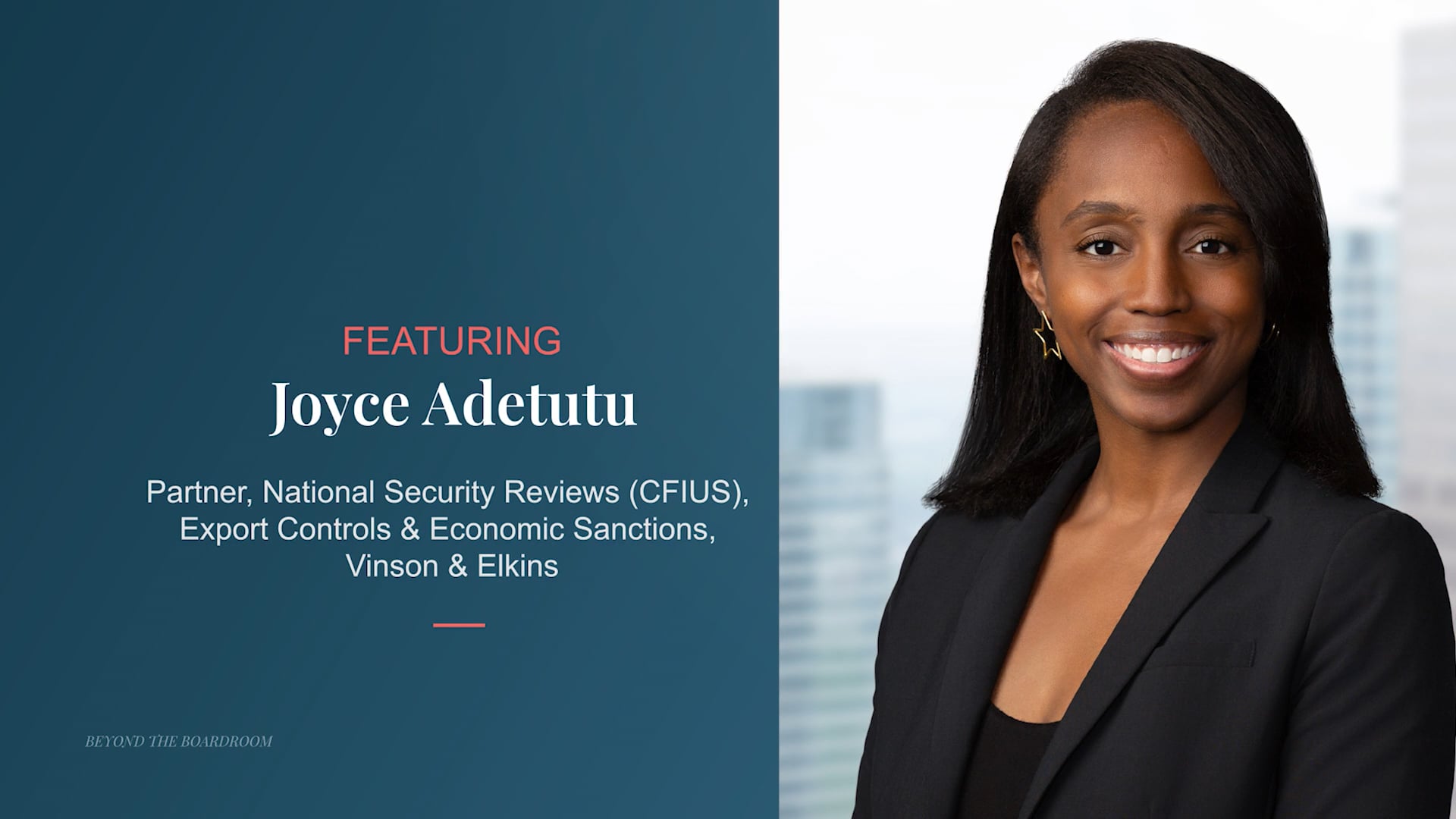
Speaking with CorpGov Editor-in-Chief John Jannarone on the inaugural episode of Beyond the Boardroom, Adetutu said trade policy under President Donald Trump’s administration has evolved from a routine legal obligation into a central component of corporate strategy.
Adetutu said sanctions, export controls and import restrictions are increasingly intertwined, citing forced labor policies and semiconductor restrictions as examples of trade rules being used to advance national security objectives.
The financial consequences can be severe, with some enforcement actions reaching billions of dollars. Trade restrictions can also disrupt manufacturing, limit access to critical components and prevent companies from entering foreign markets.
READ MORE

Agenda with Keynotes 1789 Capital, Better Home: 6th Palm Beach CorpGov Forum Nov 4-5
Adetutu pointed to Russia and Venezuela as examples of how geopolitical shifts can quickly reshape business opportunities. She urged boards to anticipate regulatory changes and incorporate trade compliance into long-term planning.
Looking ahead to the U.S. midterm elections, Adetutu said a potential Democratic takeover of Congress would be unlikely to significantly change trade policy given Trump’s reliance on executive authority.
Beyond the Boardroom is a new series co-produced by CorpGov and Vinson & Elkins examining legal and governance issues facing corporate leaders.